
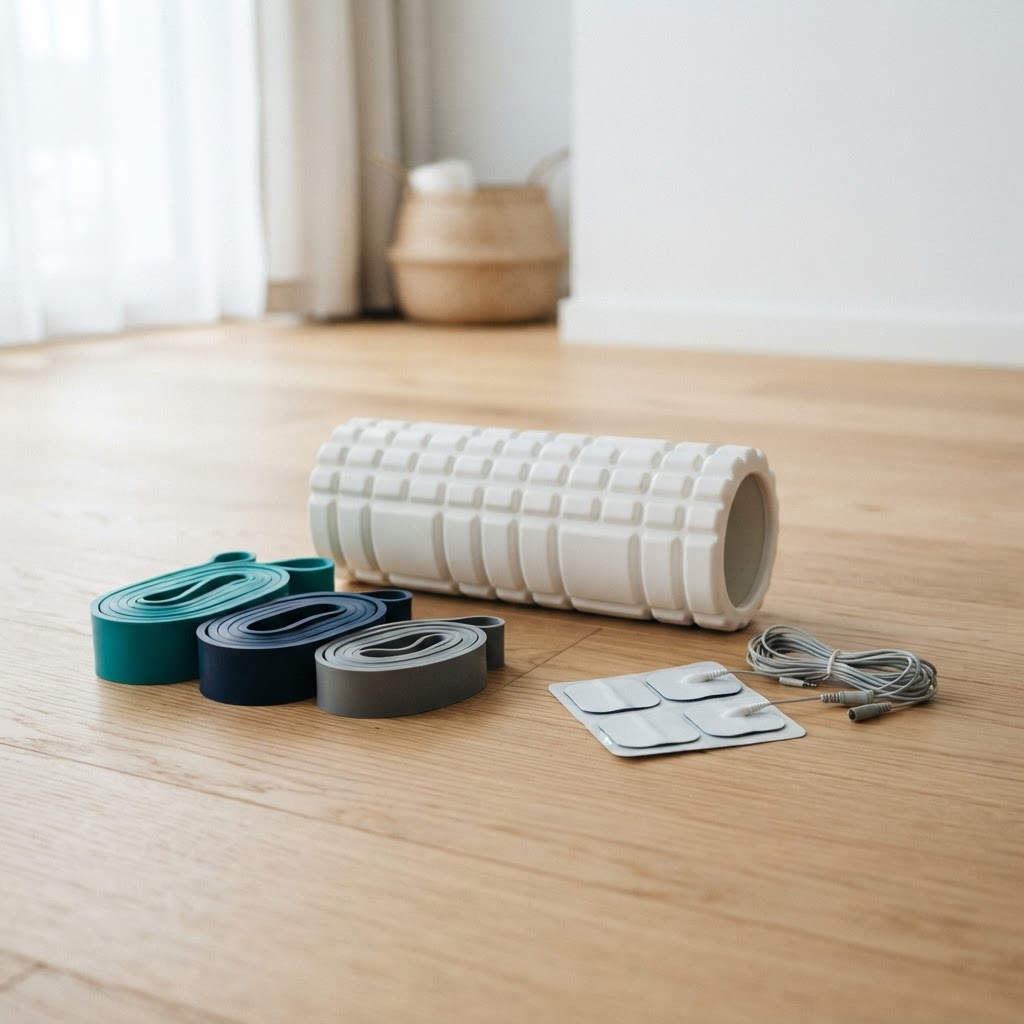
Physical therapy supply lists mix two very different kinds of items. There is equipment that lasts for years, such as treatment tables, electrotherapy units and exercise equipment, and there is a steady stream of consumables and accessories that keep that equipment usable: electrodes, lead wires, ultrasound gel, resistance bands, tape, table paper and cleaning supplies. Most PT supply problems happen where the two meet.
Track equipment together with its accessories
An electrotherapy unit isn’t usable without compatible electrodes and lead wires. A treatment table needs its paper or covers, and table paper such as Table Paper Smooth Finish comes in several widths, so check the table or dispenser before ordering. A hot pack unit needs its covers. For each major piece of equipment, list the accessories and consumables it depends on and roughly how quickly you use them. That list becomes the core of your reorder routine.
Confirm compatibility before you buy
Accessories that look interchangeable may not be. Electrode size, connector type, lead wire pin style and gel formulation can all matter. The equipment manufacturer’s instructions for use are the authority on compatibility: they may name specific accessories, list compatible options or say what not to use. When in doubt, ask the manufacturer before switching, and keep the answer with your records.
Clean reusable items as their instructions direct
Shared equipment and reusable accessories are cleaned between patients according to the manufacturer’s instructions and your practice’s policies. FDA’s information on reprocessing reusable medical devices stresses following the labeled reprocessing instructions completely and correctly, and CDC’s Environmental Infection Control Guidelines cover cleaning in healthcare environments. For purchasing, that means buying the cleaning products the instructions call for and confirming that a new cleaner is compatible with the surfaces and materials it will touch.
Set reorder points for consumables
Consumables tend to follow the patient schedule. Estimate weekly use from recent orders or a few weeks of counts, add the supplier’s typical lead time and a modest buffer, and set a reorder point. Revisit it when your caseload changes, for example when a new clinician joins or you add a program that uses more of a particular item.
Keep a small spare set
For equipment used in most sessions, a small spare set of critical accessories, such as one extra set of lead wires or a backup pack of electrodes, prevents a single failed part from canceling appointments. Note the spares on your list so they are replaced when used rather than quietly forgotten.
Plan for equipment end of life
Equipment doesn’t last forever. Keep purchase dates, warranty terms and the manufacturer’s service recommendations on file, and watch for accessories that are being discontinued, which can be an early sign that a device is nearing the end of its supported life.
An illustrative routine
An illustrative outpatient clinic keeps a single sheet listing each electrotherapy unit, its compatible electrode sizes and lead wires, and the cleaning product its manual specifies. Electrodes and gel are on a weekly reorder rhythm, while bands and tape are checked every other week. When a cheaper electrode appears, the clinic checks the unit’s manual and contacts the manufacturer before buying a single box.
Keep an accessory-to-equipment map
For each piece of equipment, list the exact model and the accessories or consumables the responsible clinician has approved for it. Include manufacturer item numbers, pack sizes and the location of the relevant instructions. A generic category name such as “electrodes” or “gel” may not capture the compatibility details needed for a reliable reorder.
When equipment is replaced, review its associated supply list rather than carrying the old list forward automatically. Mark obsolete items so they do not continue to appear in routine orders. Ask the appropriate clinical or technical reviewer to resolve compatibility questions; purchasing should not infer suitability from a photograph or a familiar connector.
Separate treatment stock from cleaning stock
Track the products used for cleaning and maintenance alongside, but distinctly from, the items used during appointments. The equipment's instructions and the practice's infection-prevention policy determine which products and processes are suitable. A purchasing checklist supports that decision; it does not replace it.
In an illustrative practice, the team reviews a table-paper reorder and discovers that the new dispenser uses a different width. Checking the equipment reference before checkout prevents ordering the familiar size for an unfamiliar fitting. The same habit applies to other accessories without assuming the same clinical rules apply to each. Our receiving checklist helps confirm that the selected accessory is the one that actually arrives.
The takeaway
Organize PT purchasing around equipment and the accessories it depends on. Confirm compatibility with the manufacturer, buy the cleaning products the instructions call for, set reorder points for consumables and keep an eye on equipment end of life.
The physical therapy and rehab department at Nuvex Medical brings equipment and supplies for that area of care together. Where manufacturers provide manuals, product pages list them under Documents, and warranty terms appear where the manufacturer states them.
Sources
Examples in this article are illustrative, not data from real customers or suppliers. This is general information, not clinical, legal or regulatory advice. Always follow the manufacturer’s instructions for use and your organization’s policies.