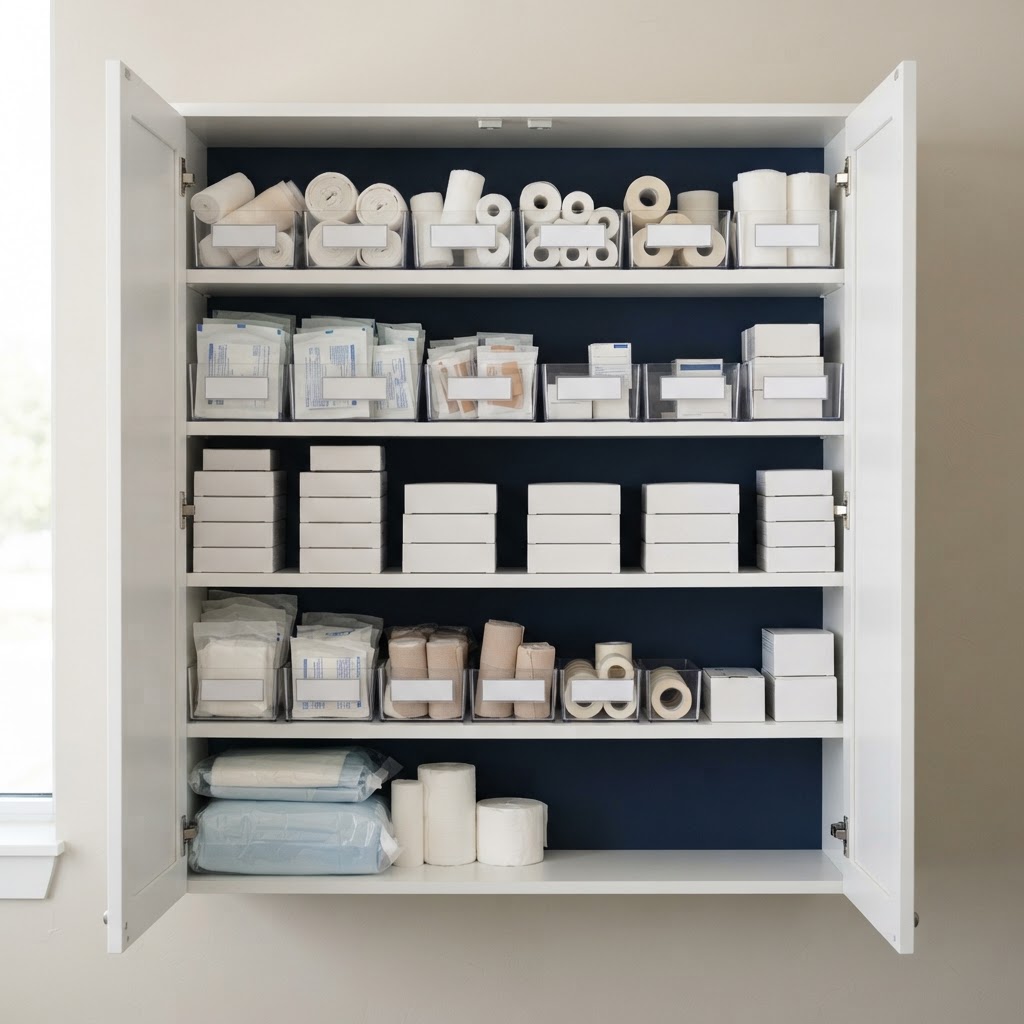
Photos of organized supply rooms tend to feature identical bins, matching labels and perfect symmetry. They look great. But the job of a supply cupboard isn’t to look calm. It is to make the right item findable in seconds, to make low stock obvious, and to make sure older stock gets used first.
If your supply room or cupboard needs a reset, organize for visibility rather than appearance. Here is a practical way to do it in an afternoon.
Start with what you have
Empty one section at a time. As you go, sort items into three groups: in use and in date; expired or damaged; and items nobody recognizes or uses. Expired and damaged items should be handled under your organization’s policy rather than quietly returned to the shelf. Unrecognized items deserve a question to clinicians, because they may be leftovers from a product you have already replaced.
Group by how people search
Arrange supplies the way staff look for them, usually by task or area of care rather than alphabetically. Keep the most-used items between waist and shoulder height and heavier cases low. Give each item one home, labeled with the product name, the size and, where relevant, whether it is sterile or nonsterile.
Make low stock visible
- Clear or open bins show the quantity without opening anything.
- Reorder markers, a tag or a line inside the bin, show the point at which to reorder.
- Two-bin rotation uses a front bin and a back bin: when the front bin empties, it triggers a reorder while staff work from the back bin.
Rotate first-expiring stock forward
For items with expiration dates, use first-expiring, first-out, often shortened to FEFO: the stock that expires soonest goes in front, newer stock behind. FEFO differs from first-in, first-out. A delivery that arrived later can occasionally carry an earlier expiration date, so read the date rather than relying on arrival order.
Follow each product’s storage instructions
Storage conditions are part of a product’s labeling, not a matter of taste. Manufacturers may specify temperature ranges, humidity limits, protection from light or keeping packages off the floor. References such as CDC’s Disinfection and Sterilization Guideline and its Environmental Infection Control Guidelines inform how healthcare settings handle sterile items and the care environment; your organization’s policies translate them into rules for your space. When in doubt, check the manufacturer’s instructions for use.
An illustrative reset
An illustrative two-room practice spends an afternoon resetting a single cupboard. They find three partly used glove boxes in different sizes mixed together, a sleeve of expired gauze at the back and two boxes of a discontinued item. Afterwards, each item has one labeled home, reorder tags sit a quarter of the way up each bin and the first-expiring stock is at the front. Nothing about it would win a design award. It works.
Keep it reset
A reset fades within weeks unless someone owns it. Add a quick tidy to the weekly stock check, and repeat the full reset every few months or whenever the product mix changes.
Design the shelf around a simple question
Ask a colleague who does not normally order supplies to find one specified item and tell you how much usable stock remains. Watch where they hesitate. An attractive label may still omit the size, counting unit or distinction between similar products. Correct the label or location before adding more bins.
Draw a basic location map using room, cabinet and shelf names that staff already recognize. Put those same names on the reorder list. Give overflow stock an explicit location and include it in counts; otherwise a nearly empty front bin can trigger another purchase while an unopened case sits elsewhere.
Make replenishment visible without hiding exceptions
A two-bin arrangement needs an agreed refill rule and someone responsible for acting on the signal. Size the reserve around your own review cadence, usage and delivery uncertainty rather than assuming every second bin provides sufficient protection. Record damaged, expired or quarantined stock separately so it is not counted as available.
In an illustrative cupboard reset, the team discovers that three locations hold the same approved item. They consolidate the stock where policy permits, record the remaining overflow and add the location to the weekly count sheet. The improvement is traceability, not merely a tidier photograph. Use the reorder-planning guide to connect shelf signals with outstanding orders and an appropriate review routine.
The takeaway
Organize the cupboard so that anyone can find an item, see when it is low and use the first-expiring stock first. Follow each manufacturer’s storage conditions, and give the system an owner.
Where a manufacturer provides manuals or spec sheets, Nuvex Medical product pages list them under Documents, a useful place to check storage instructions before you buy. Browse supplies.
Sources
Examples in this article are illustrative, not data from real customers or suppliers. This is general information, not clinical, legal or regulatory advice. Always follow the manufacturer’s instructions for use and your organization’s policies.