
Dental practices run on schedules. Hygiene visits, restorative appointments and emergency slots each draw on different supplies, and a missing item can mean rescheduling a patient. Most last-minute scrambles share a cause: purchasing and inventory management that run separately from the schedule they serve.
What follows is a general workflow. It doesn’t recommend specific products or clinical protocols, which belong to the dentist and the practice’s infection-prevention program.
Connect supplies to the schedule
Start by mapping the supplies each common appointment type uses. A hygiene visit, a crown preparation and a new-patient exam each have a typical set of disposables and materials. You don’t need exact counts; rough estimates per appointment type are enough. When next month’s schedule is heavy on a particular procedure, you will know which supplies to check first.
Count what you actually use
Estimates improve quickly with a little data. For a month, note when each box or bag of an everyday item is opened. Divide by the number of appointments, and you have a usage rate per visit that turns next month’s schedule into a shopping list. Repeat the count whenever the mix of services changes.
Separate everyday disposables from procedure materials
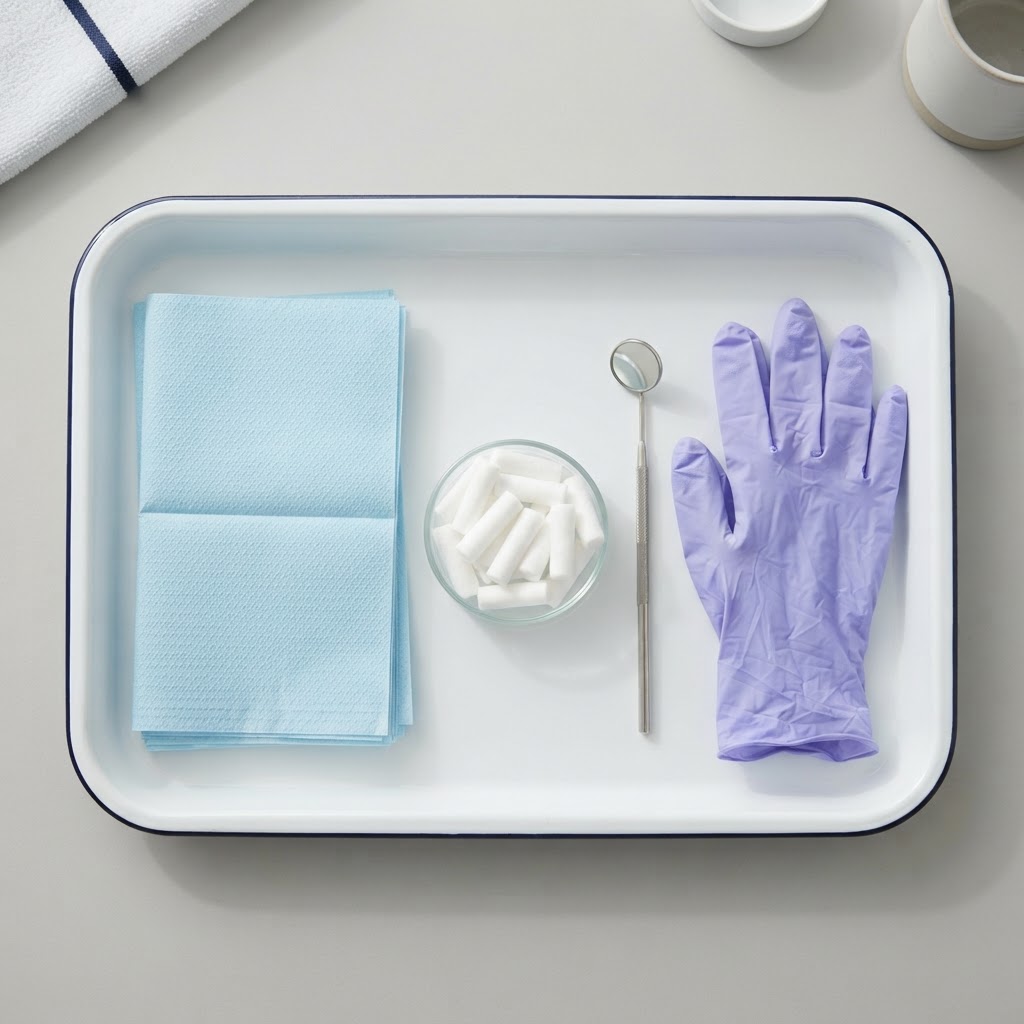
- Everyday disposables are used in nearly every appointment: gloves, masks, patient bibs, surface barriers, cotton rolls, saliva ejectors and cups.
- Procedure materials are used less often and frequently have tighter storage or expiration requirements: impression materials, restorative materials and bonding agents, for example.
Everyday disposables suit a steady reorder rhythm. Procedure materials need closer attention to expiration dates and to what is coming up on the schedule.
Infection prevention runs on supplies
Much of a dental supply list exists to support infection prevention: personal protective equipment, sterilization pouches and indicators, surface barriers and disinfectants. CDC’s Summary of Infection Prevention Practices in Dental Settings outlines the practices those supplies support. Purchasing doesn’t set those protocols, but it should make sure the specific products the protocols call for are always on hand.
Respect instructions for use
Instruments, sterilization supplies and materials come with manufacturer instructions for use covering storage, handling, compatibility and, for reusable items, cleaning and reprocessing. When you consider a different brand of sterilization pouch, indicator or material, confirm that it is compatible with your equipment and processes, and get the dentist’s approval before switching. FDA’s information on reprocessing reusable medical devices explains why following labeled instructions completely and correctly matters.
Plan for backorders before they happen
Keep a short list of items that would stop work if they ran out, and for each, note an acceptable alternative that has already been reviewed. When a supplier reports a backorder, you choose from a pre-approved option instead of improvising during a busy week.
An illustrative month
An illustrative two-chair practice reviews next month’s schedule at its last staff meeting of the month. A cluster of crown appointments prompts a check on impression and temporary materials, while hygiene supplies stay on their weekly rhythm. One sterilization indicator is backordered, so the team switches to the alternate the dentist approved last quarter. No appointments move.
Translate the schedule into a planning worksheet
Group appointments into the categories the practice already uses and record the approved supplies associated with each. Keep patient names and treatment details out of a general purchasing worksheet. Use aggregate appointment counts for planning, with the responsible clinical team checking whether the assumptions fit the upcoming mix of work.
Review the worksheet against actual stock before ordering. A busier schedule does not automatically mean every item needs replenishment; an existing delivery or unused stock may already cover the increase. Keep units consistent, particularly when materials are purchased in kits but counted as individual components.
Give infrequently used materials an owner
High-volume disposables tend to attract attention because staff see them daily. Less frequently used materials may need a separate check for expiry, storage requirements and the next scheduled need. Assign that check to someone familiar with the practice's approved products rather than relying on a general cupboard count.
In an illustrative review, a practice notices that a less common procedure is scheduled again after several quiet weeks. Staff confirm the selected materials with the dentist, check the existing packages and resolve any missing information before placing the order. This is a purchasing exercise, not a recommendation for a treatment or material. The substitution-review guide provides a way to document proposed changes without treating similar names as proof of compatibility.
The takeaway
Tie purchasing to the schedule, give everyday disposables a steady rhythm, watch procedure materials and expiration dates closely, respect each product’s instructions for use, and pre-approve alternatives for critical items.
Dental practices are among the organizations that can apply for a Nuvex Medical institution account. Many everyday supplies dental teams also use, such as exam gloves and gauze, are in the shop, and if there is something specific you are looking for, contact us.
Sources
- CDC: Summary of Infection Prevention Practices in Dental Settings
- FDA: Reprocessing of Reusable Medical Devices
Examples in this article are illustrative, not data from real customers or suppliers. This is general information, not clinical, legal or regulatory advice. Always follow the manufacturer’s instructions for use and your organization’s policies.